If your other radiators are heating normally but one remains cold, even after bleeding, a stuck thermostatic radiator valve (TRV) pin may be responsible. The valve head can still turn as usual, yet the radiator does not warm up because the small metal pin underneath is stuck in the closed position.
Freeing the pin is often straightforward, but it needs a gentle approach. Do not force the valve, undo the valve body or drain the central heating system. The following steps can help you check the TRV safely and decide when professional help is needed.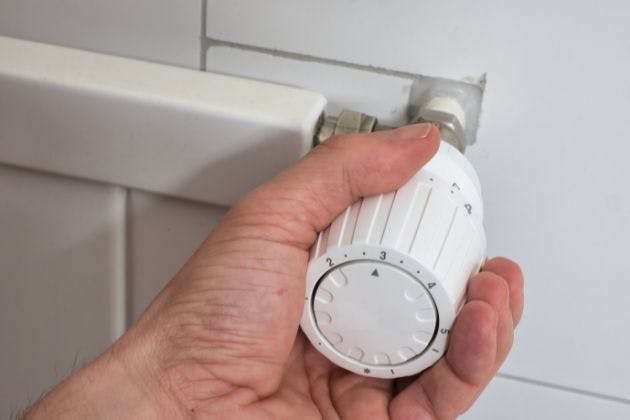
Check the symptom pattern
A TRV controls the flow of hot water into an individual radiator. When the room reaches the temperature selected on the numbered head, the valve presses the pin down and restricts the flow. If the pin remains stuck, hot water cannot enter the radiator, so it stays cold while other radiators continue to work.
Before touching the valve, check that the radiator’s lockshield valve has not been closed and that the heating is operating normally elsewhere in the property. If the radiator is completely cold after bleeding and the TRV head turns but makes no difference, the pin is a sensible place to investigate.
Turn the heating off and allow the radiator and valve to cool fully.
Set the TRV to its highest setting before removing the head.
Place a cloth beneath the valve in case there is a small amount of surface moisture.
Work slowly and stop if the valve body begins to leak.
Free the TRV pin safely
1. Remove the thermostatic head
TRV heads are fitted in several ways. Some have a threaded retaining ring that can be loosened by hand, while others use a plastic collar, spring clip or small retaining screw. Set the head to its highest number, then loosen or release the fitting without using excessive force. You should not need to disconnect any pipework.
If the head will not come off easily, check for a retaining clip or screw rather than forcing it. The plastic head can crack, and the valve body underneath should not be twisted.
2. Find and check the pin
With the head removed, you will see a small metal pin in the centre of the valve. Press it very gently with a fingertip or the flat end of a suitable tool. A working pin normally moves down a few millimetres and springs back up when released.
If it feels slightly stiff, press it repeatedly and gently. You can also tap the side of the valve body lightly with the handle of a screwdriver while applying gentle downward pressure. The aim is to loosen the pin gradually, not to hammer it into the valve.
3. Use pliers only when appropriate
If the pin is exposed, straight and has enough surface to grip, you may use smooth-jawed pliers very carefully. Hold the pin lightly and work it with tiny up-and-down movements, without twisting or pulling it out. Never clamp hard, as the pin can bend, snap or damage the internal valve mechanism.
Once the pin moves freely and springs back, refit the TRV head securely. Turn the head to a high setting, switch the heating on and allow time for the radiator to warm. Do not expect instant heat, as hot water may take several minutes to circulate.
What not to do
A thermostatic radiator valve is connected to the pressurised heating system, so forcing it can turn a minor fault into a water leak. Do not use penetrating oil inside the valve, strike the pin heavily or pull it out with pliers.
Do not undo the valve body, loosen compression fittings or drain the system to free a TRV pin. Those jobs require the system to be isolated correctly and may release hot water or cause loss of pressure.
When to call a plumber or heating engineer
Stop immediately if water appears around the valve body, the pin will not move at all or the pin feels loose rather than spring-loaded. A seized valve may need replacement, and a leaking valve should be dealt with before further testing causes more water damage.
If the pin moves normally but the radiator remains cold, the fault may be elsewhere. Incorrect system balancing, a closed lockshield valve, trapped air or sludge can restrict circulation. If several radiators have cold spots, water discoloured by repeated bleeding or poor heat across the system, powerflushing may be worth discussing with a heating professional. For a single faulty valve or wider heating issue, plumbing services can provide a safe diagnosis.
Frequently asked questions
Can I free a TRV pin without draining the radiator?
Usually, yes. Removing the thermostatic head exposes the pin without opening the water circuit. Never loosen the valve body or pipe connections.
How far should the TRV pin move?
It normally moves only a few millimetres and should spring back when released. It should not come out of the valve.
What if the valve head turns but the radiator stays cold?
The head may be turning without moving the seized pin. Remove the head only when the system is cool and check the pin’s movement carefully.
A stuck TRV pin is a common reason for one radiator staying cold, and gentle movement may restore the flow without major work. If the valve is seized, leaking or the radiator remains cold after the check, contact RDS PLUMBING LTD on 08000282031 to book a professional visit and have the fault assessed safely.