If your boiler pressure keeps slipping into the red and you notice a silver hose—known as the filling loop, underneath your boiler, you’re not alone. The filling loop is a key part of your heating system, allowing you to top up the system pressure when it drops. Understanding how system pressure works and the role of the filling loop can help you spot potential issues early. Low pressure often causes your heating and hot water to stop working properly, so recognising these signs means you can take action sooner.
However, topping up the pressure should be done carefully and according to your boiler manufacturer’s instructions. If you’re unsure or the pressure keeps dropping, it’s best to contact a professional heating engineer to avoid damage or safety risks.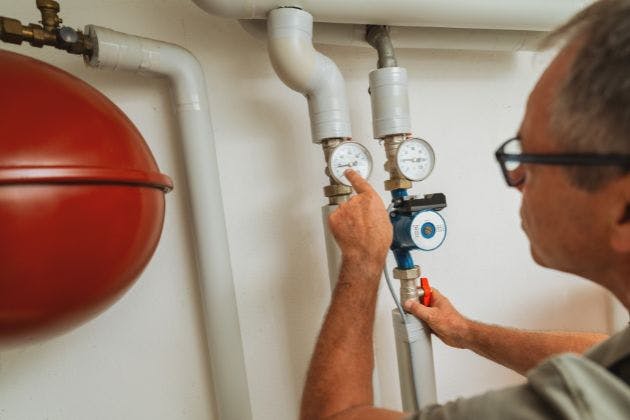
What does system pressure mean on your boiler?
Most modern boilers are part of a sealed heating system. Instead of constantly taking in fresh water, the same water circulates your radiators and pipework under a set pressure.
System pressure is simply the force of the water within that closed loop, usually shown on a gauge on the front or underside of your boiler. For many boilers, the normal cold pressure is around 1 to 1.5 bar, but you must always check your manual for the correct range.
If the pressure drops too low, the boiler’s safety controls will often shut it down. This can leave you without heating or hot water, as the boiler cannot safely move water around the system. Very low pressure can also allow air into the pipework, leading to noisy pipes and patchy heating.
What a boiler filling loop actually does
The filling loop is the section of pipework that allows a controlled amount of fresh water from the mains to enter your heating system when the pressure has fallen. It is not meant to be left open all the time.
Most homes have one of two common types of filling loops:
Integrated filling loop with small black or blue valves built into the boiler casing
External braided hose below the boiler, often a flexible silver pipe with valves at each end
The filling loop is usually found directly under the boiler or very close to the main pipework. On a combi boiler, you might see it amongst the copper pipes beneath the unit. On a system boiler, it may be near the cylinder or on the primary pipework, again with a braided flexible hose between two valves.
Some newer boilers hide the integrated filling loop behind a small flap or drop-down panel. If you are unsure what you are looking at, do not guess. Check the manufacturer's instructions or ask a qualified engineer to point it out for you at the next service.
Safe approach to topping up with the filling loop
It can be tempting to treat the filling loop as a quick fix, but it must be used with care. The aim is to restore pressure to the recommended cold level, not to fill the system as much as possible.
Always start by checking your boiler manual. It should explain the correct pressure range for your model and show the exact filling loop layout. If you do not have a paper copy, most manuals are available online on the manufacturer’s website.
If anything looks damaged, corroded or unclear, stop and call a heating engineer. Forcing stiff valves or guessing which tap to turn can cause leaks, over-pressurising or even damage to the boiler.
Never over-pressurise the system. If the gauge shoots above the recommended range when cold, you may trigger the pressure relief valve, which will dump water outside through a copper pipe. That is a sign the system needs attention, not more topping up.
For more on pressure behaviour in different situations, have a look at our main boiler pressure advice page if you see it linked elsewhere on our site, as it explains normal readings in more depth.
Typical reasons for boiler pressure drops
Occasional minor pressure loss can happen over time, especially after bleeding radiators. However, if you find yourself reaching for the filling loop regularly, something is usually wrong.
Common causes of recurring pressure loss include:
Small leaks in the system, such as weeping radiator valves, pinholes in pipework or joints under floors
Pressure relief valve (PRV) discharges water if the system has been over-pressurised or the valve is worn
Expansion vessel issues where the internal air charge has failed, causing big pressure swings between hot and cold
Bleeding radiators too often, which lets water out each time, and gradually drops the system pressure
These problems will not be solved by repeatedly using the filling loop. In fact, constantly adding fresh water can increase corrosion and sludge build-up inside the system, which can shorten the life of your boiler and components.
Symptoms that need a heating engineer
Several warning signs mean you should stop topping up and arrange a professional inspection. This is particularly important for families and older homeowners in areas like Hornchurch, Dagenham and Romford who rely on their boilers daily.
Book a boiler repair visit promptly if you notice any of the following:
Pressure repeatedly dropping: If the gauge always falls below the recommended level within days or weeks of topping up, there is almost certainly an underlying fault that needs expert diagnosis.
Visible leaks: Damp patches on ceilings, staining around radiators, green or white crust on copper joints, or water on the floor near the boiler or pipework are all signs of leaks that must be traced and repaired.
Noisy system: Gurgling, banging, kettling or rushing water sounds in radiators and pipes can indicate air, circulation issues or scale build-up. These can be linked to pressure problems and should not be ignored.
Relief pipe dripping: If you see water regularly dripping or staining below the copper pipe that exits the wall outside near the boiler, the pressure relief valve may be lifting. This needs proper testing and, if necessary, replacement by an engineer.
You can also explore our dedicated boiler repair service page for more detail on how faults are investigated and resolved by professionals.
When to book a boiler repair visit
If you are ever unsure about the correct use of your filling loop, it is safer to stop and call a Gas Safe registered engineer. This is especially true if the pressure gauge behaves unpredictably or jumps up and down between hot and cold.
You should also arrange a visit if your boiler frequently locks out with low-pressure fault codes, or if topping up has become part of your weekly routine. That pattern points to a leak, expansion vessel problem or a faulty valve rather than a simple user adjustment.
In many cases, a thorough inspection, pressure test and service will pinpoint the fault and prevent further damage. Sorting these issues early can reduce the risk of unexpected breakdowns on cold days when you need your heating most.
Need help with your boiler filling loop in Hornchurch, Dagenham or Romford?
If you are worried about low boiler pressure, unsure how your filling loop works, or have spotted any of the warning signs above, it is time to speak to a professional. A quick chat with a qualified engineer can often save a lot of stress later on.
RDS Plumbing Ltd provides friendly, expert boiler repair and heating support across Hornchurch, Dagenham and Romford. To arrange a visit or get advice on your boiler pressure issues, call RDS Plumbing Ltd on 08000282031 and we will be happy to help.