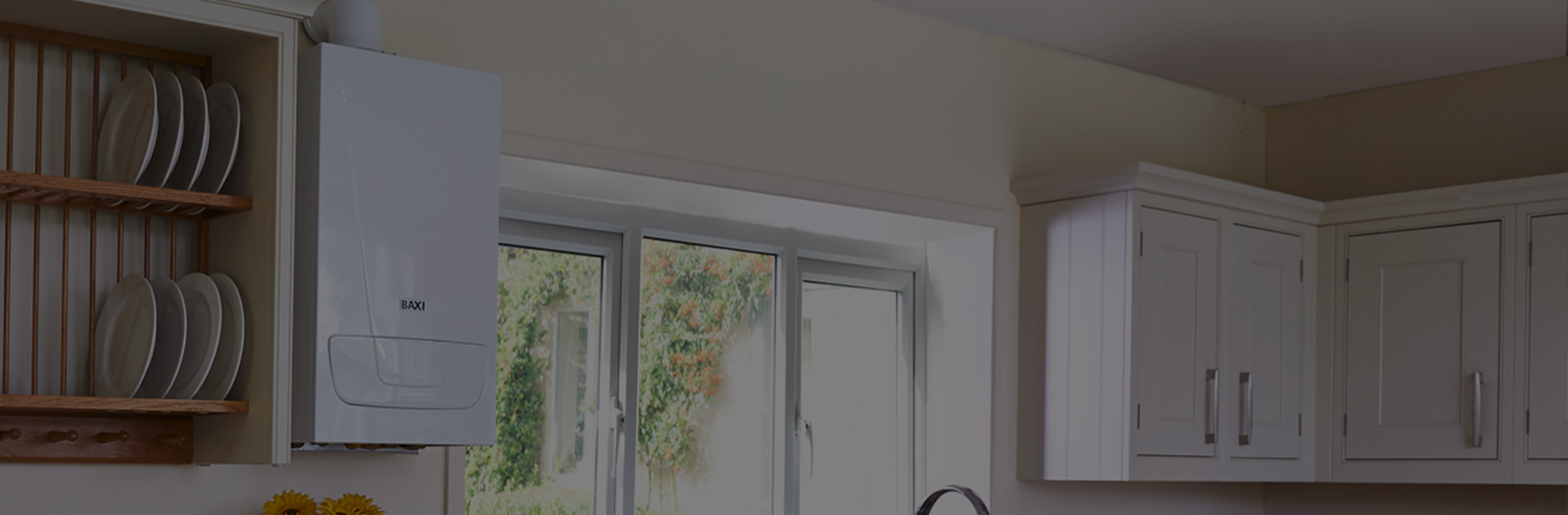
If your radiators are warming up nicely but you’re only getting cold water from the taps, this usually indicates a problem with how your boiler is managing the hot water supply. This issue is often linked to specific boiler components that control the flow of hot water to your taps, rather than a full system failure. The good news is that since your heating is still working, the boiler itself is still operational, which means the fault is likely isolated and can be fixed without replacing the entire unit. However, it’s important to address this promptly to restore hot water and avoid further damage or inconvenience. Ignoring the problem could lead to more serious issues or a complete boiler breakdown.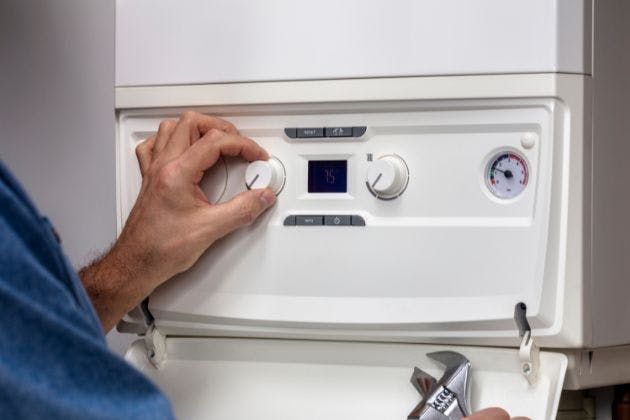
How different boiler types behave
Before looking at likely faults, it helps to know what type of boiler you have. Combi boilers heat water on demand, while system and conventional boilers heat water into a separate cylinder.
With a combi boiler, having heating but no hot water is often linked to parts that switch between central heating and hot taps, such as the diverter valve or sensors. With a system or conventional boiler, the boiler may be fine but the cylinder controls, valves or thermostat might be at fault.
If you are in a hard-water area such as much of East London or Essex, limescale can also affect hot-water components long before it stops your heating.
Safe checks before calling an engineer
There are a few simple checks you can safely carry out without opening the boiler. These can help you rule out simple issues and give useful information to your engineer.
Confirm you have hot-water demand set on the controls or combi selector
Check the boiler display for any fault or error codes and note them down
Verify the pressure gauge is in the normal range (usually around 1 to 1.5 bar when cold)
If the manufacturer recommends it, try a single reset only, then wait and test again
Test more than one hot tap or shower to see if the issue is whole-house or localised
Do not remove or open the boiler casing. Anything beyond external controls, the pressure gauge and visible isolation valves should be left to a Gas Safe registered engineer.
Most likely faults when there is no hot water
Diverter valve faults
In a combi boiler, the diverter valve sends heated water either to your radiators or to your taps. If this valve sticks in the heating position, your radiators will work but the hot-water side will stay cold.
You might notice the boiler firing when you open a hot tap, but the radiators warming slightly at the same time. Diverter valves can sometimes be freed temporarily, but they usually need repair or replacement by an engineer.
Plate heat exchanger issues
The plate heat exchanger is the part in many combi boilers that transfers heat from the boiler water to your tap water. In hard-water areas like East London and Essex, limescale can build up inside it and restrict flow.
Typical signs include hot water that runs warm then cool, or the boiler cycling on and off while the tap is open. A blocked or scaled plate heat exchanger may need cleaning or replacing, and sometimes a full system flush or water treatment is recommended to prevent a repeat.
Thermostat and sensor problems
Modern boilers rely on temperature sensors and thermostats to control how much they heat your water. If a hot-water sensor fails or drifts out of range, the boiler might not recognise that hot water is being requested, even though the heating still works.
You may see fluctuating temperatures at the tap, or the boiler may not fire at all when a hot tap is opened. Diagnosing this safely involves electrical testing and checking readings against the manufacturer data, so it is a job for a qualified engineer.
Low pressure and lockout behaviour
If the system pressure falls too low, many boilers will go into a lockout or fault state to protect themselves. Sometimes they will still try to run the heating but refuse to produce hot water consistently.
If your pressure gauge is below the marked green or normal zone, it might need topping up via the filling loop, but only if you know how to do this correctly and it is recommended in your manual. If the boiler keeps locking out, or pressure keeps dropping, stop resetting it and arrange a professional diagnosis as there may be a leak or another deeper fault.
Programmer and control settings
With system and conventional boilers, it is common for the problem to lie with the timer, programmer or cylinder thermostat, rather than the boiler itself. The heating channel might be on, while the hot-water channel is off or timed differently.
Check your controls to make sure the hot water is actually set to "on" or "continuous" for testing. Also check any cylinder thermostat is turned up enough to request heat. If everything looks correct but there is still no hot water, a faulty programmer, motorised valve or wiring centre could be to blame.
When to call immediately
Some situations should not be left until tomorrow. If any of the following apply, turn the boiler off and seek help straight away:
Any smell of gas around the boiler, meter or pipework
Repeated lockouts or fault codes returning after you reset once
Visible water leaks from the boiler, pipework or cylinder
In these cases you need a Gas Safe engineer to inspect the system safely and prevent further damage or risk.
FAQs about heating working but no hot water
Can I still use the heating?
If your heating is working but you have no hot water, many people carry on using the radiators for comfort. In the short term this is usually possible, but it depends on the fault.
If there are any warning lights, error codes, strange noises or leaks, turn the system off and get it checked. Using the heating when key components are failing can cause extra wear or leave you with a full breakdown later.
Is it safe to keep resetting the boiler?
No, repeatedly resetting the boiler is not recommended. A reset is there to clear a one-off fault, such as a brief gas supply interruption, not to override an ongoing problem.
If the boiler locks out again after one reset, stop trying and call an engineer. Forced restarts can stress components and, more importantly, bypass built-in safety protections that are telling you something is wrong.
Could it be limescale?
Yes, limescale is a very common cause of hot-water issues, especially in hard-water areas like much of East London and Essex. It tends to build up inside plate heat exchangers, hot-water pipes, taps and shower valves.
Over time, limescale restricts flow and reduces heat transfer, so your boiler struggles to provide a steady hot supply. Your engineer may recommend descaling, fitting a scale reducer, or upgrading water treatment to protect your boiler and improve hot-water performance.
Next steps and booking a repair
If you have gone through the basic checks and still have no hot water but the heating works, the safest and quickest solution is a professional diagnosis. A trained engineer can identify whether it is a diverter valve, plate heat exchanger, sensor, control fault or something more serious.
For fast help with boiler repair issues and no hot water problems, contact RDS Plumbing Ltd on 08000282031. We can arrange a Gas Safe engineer visit, check your system thoroughly and get your hot water back on as soon as possible, whether you are in East London, Essex or the surrounding areas. You can also explore our local service areas via our location pages and book a convenient appointment.
EndFragment