

We carry out boiler repairs, including emergency repairs, in Romford, Dagenham, Hornchurch and the areas nearby. Use our contact form or give us a call to talk to us today.
Blog
How to fix common boiler issues
RDS Plumbing Ltd
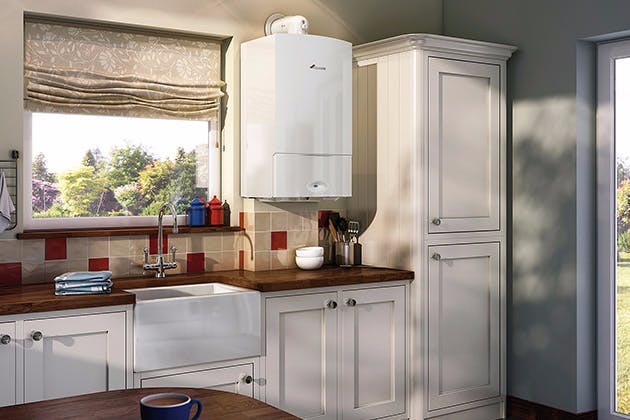
Boilers can run into problems that stop your heating or hot water working. Knowing which ones you can safely check yourself, and which need an engineer, can save you time and money. In this guide we go through the most common boiler problems and what you can do about each one.
If you need boiler repairs in Romford, Hornchurch, Dagenham or nearby, get in touch with us today.
How to find and fix simple boiler problems
Low boiler pressure
Low pressure is one of the most common boiler problems. It can make your heating work poorly or stop it altogether. You can check the pressure on the gauge on the front of your boiler. Most boilers should read between 1.0 and 1.5 bar when the heating is off. If it reads below 1.0, the pressure is low.
To fix it, you top up the boiler with water, called repressurising. This usually means opening the filling loop (a short pipe with one or two taps, under or near the boiler) to let more water into the system. Your boiler manual will show you how to do this safely for your model.
Leaks
Leaks need dealing with quickly, before they cause water damage or harm the boiler. Water can come from parts inside the boiler, from its valves or from the pipes around it.
If you see water around or under your boiler, turn the boiler off and put a towel or bowl down to catch the drips. Don't take the cover off the boiler or try to tighten or reseal anything inside it. A boiler is a gas appliance, and only a Gas Safe registered engineer should work on it.
Pilot light keeps going out
Some older boilers have a pilot light, a small flame that stays lit to light the main burner. If it keeps going out, your heating and hot water stop. The cause might be a faulty thermocouple (a safety sensor that cuts off the gas when it can't feel the flame), a blocked pilot jet or a draught coming down the flue (the pipe that carries fumes outside).
You can try relighting the pilot light by following the instructions in your boiler manual. Don't try to clean or take apart the pilot assembly yourself. If the pilot light keeps going out, turn the boiler off and ask a Gas Safe registered engineer to find the cause. If you ever smell gas, turn off the gas at the meter, open the windows and call the National Gas Emergency Service straight away.
No heating or hot water
No heating or hot water can have many causes. It might be an airlock (a pocket of air blocking the water), a faulty thermostat, or a failed motorised valve or diverter valve (the valves that send hot water to your radiators or your taps).
Before you call an engineer, check that:
the boiler has power and its display or light is on
the thermostat is on and set above the room's temperature
the timer or programmer is set to on
the pressure gauge reads at least 1.0 bar
If all of that looks right, the fault is likely inside the boiler or the system, and an engineer will need to look at it.
Frozen condensate pipe
A frozen condensate pipe is common in cold UK winters. Modern condensing boilers have this plastic pipe to carry waste water (condensate) from the boiler to a drain outside. If it freezes, the boiler shuts down for safety.
To thaw it, pour warm water (not boiling) over the frozen part of the pipe outside, or hold a hot water bottle against it. Once it has thawed, reset the boiler as your manual explains.
Radiators not heating up
If a radiator is cold at the top and warm at the bottom, there is probably air trapped inside it. Bleeding the radiator usually fixes this.
Turn the heating off and let the radiators cool first. Then use a radiator key to open the small valve at the top corner of the radiator, holding a cloth underneath. You'll hear air hiss out. When water starts to come out, close the valve. Bleeding radiators can lower the boiler's pressure, so check the gauge afterwards and top it up if needed.
Strange noises
Banging, whistling or gurgling from your boiler can come from air in the system, low pressure, or limescale building up in the heat exchanger (the part that heats the water). Check the pressure first and top it up if it's low.
If the noise carries on, limescale or sludge (a build-up of dirt and rust in the system) may need cleaning out by an engineer.
Other Articles